Five Websites That Did Not Exist Three Sessions Ago
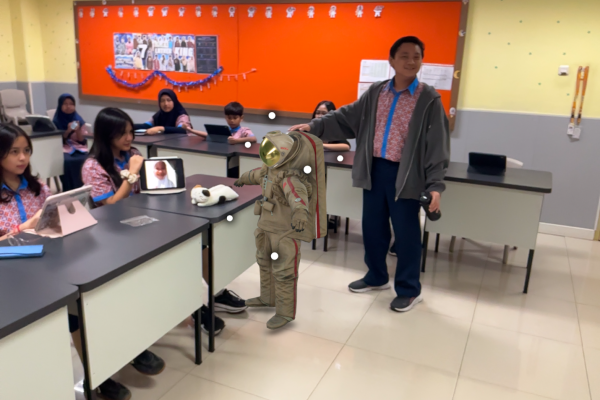
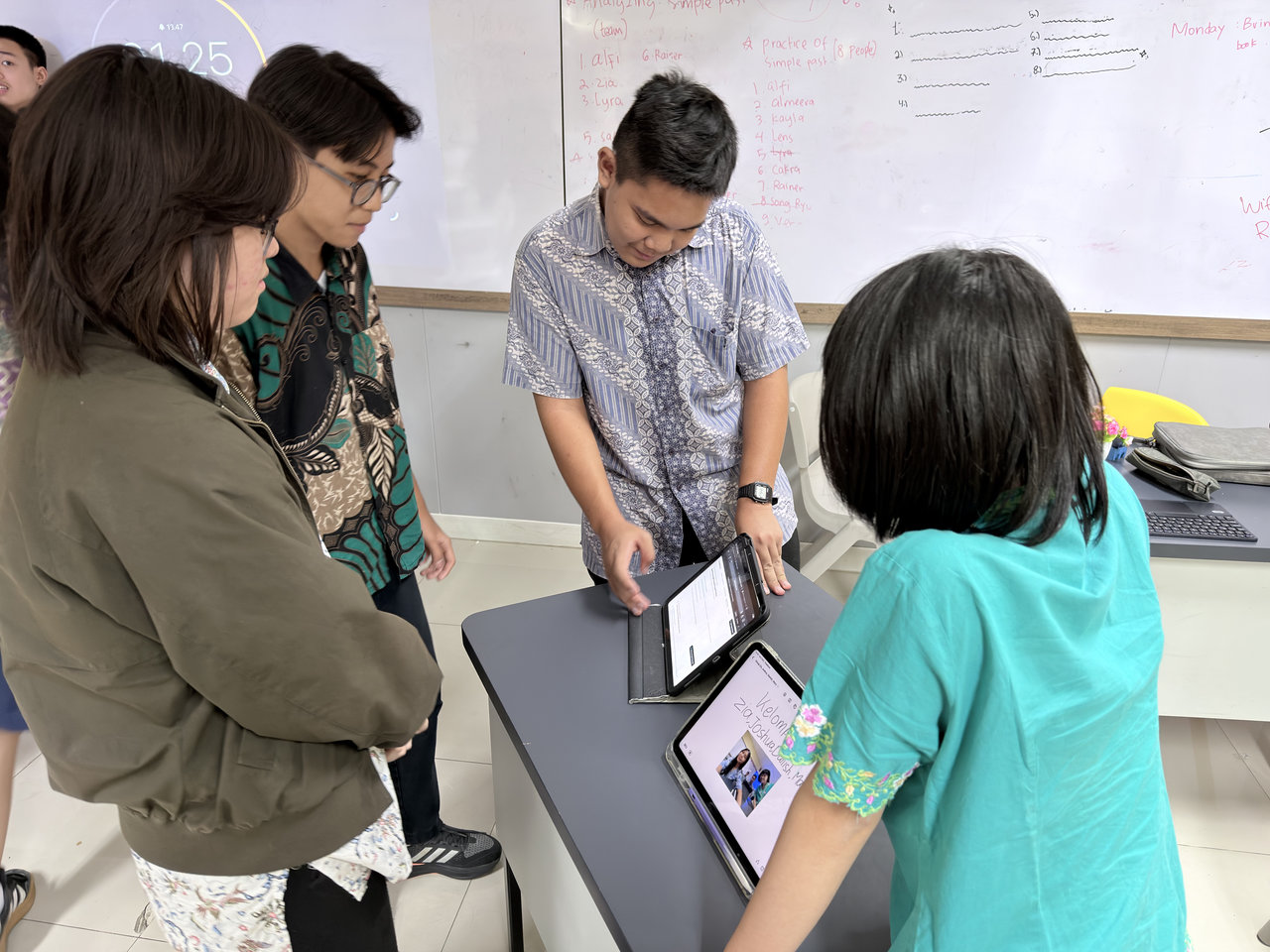
The final lesson opened with five booths and one rule: half of each team stays behind the screen, the other half walks the room trying to break somebody else’s work. Every application running there was software nobody could have written when the project began.
Writing the Instruction Instead of the Code
This was Informatics, Year 8. Mr Salman Al Farisyi gave each of five teams a genuine problem to build against: cyberbullying, answered by a Kindness Converter that softens a hostile comment before it is posted; artificial intelligence ethics, turned into an interactive quiz; cybercrime and data privacy, shaped into a Password Strength Meter; conservation, measured by a Carbon Footprint Calculator; digital exclusion, met by a Volunteer Opportunity Matcher.
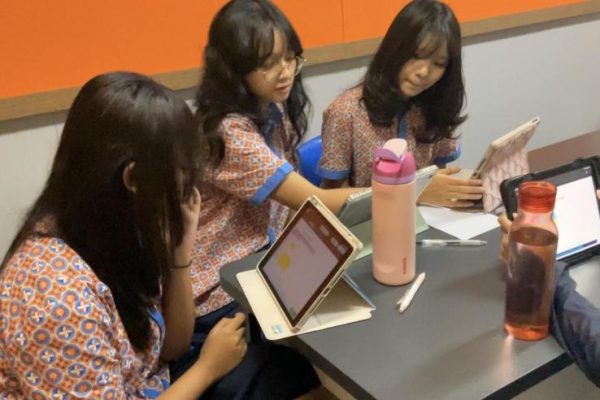
Across three sessions, students learned prompt engineering inside Google AI Studio, turning plain sentences into working HTML, CSS and JavaScript. The first session gave each team a topic, then sent the groups away to name the problem hiding underneath it and draft the structured prompt that would summon a prototype. The second opened with a feedback round from their teacher, after which teams refined what the machine produced instead of accepting it. The showcase closed with a guided reflection on letting a model write something that sorts, scores or judges people.
The Part the Screens Do Not Show
Building one working web application forces a Shared Product: each member owned a piece, and the pieces had to fit before anyone could demo anything. Naming the real problem inside a broad topic, then agreeing how an instruction should be phrased, was Joint Reasoning under a deadline, and five fixed teams made Group Work unavoidable for the quiet ones too.
Judging the generated code was the intellectual core. Students tested the output, spotted where it misread the brief and rewrote the prompt, which is Critical thinking pointed at a tool designed to be obeyed. The finished pages were Student create products in the strictest sense, because they ran. Booth visitors and peer assessments brought Attention to audience, since a stranger one table over notices when a calculator lies. Each topic mirrored a Realistic task already sold somewhere in the world, and the chance that a Kindness Converter might genuinely be used gave the project Authentic engagement beyond a mark.
Whose Booth Would Your Child Want to Visit?
Ask which topic their team drew, then what the machine got wrong on the first attempt. That answer tells you whether they were building or merely watching, and whose problem they think deserves an app next.