Breaking the News: When the Classroom Becomes a Broadcasting Studio

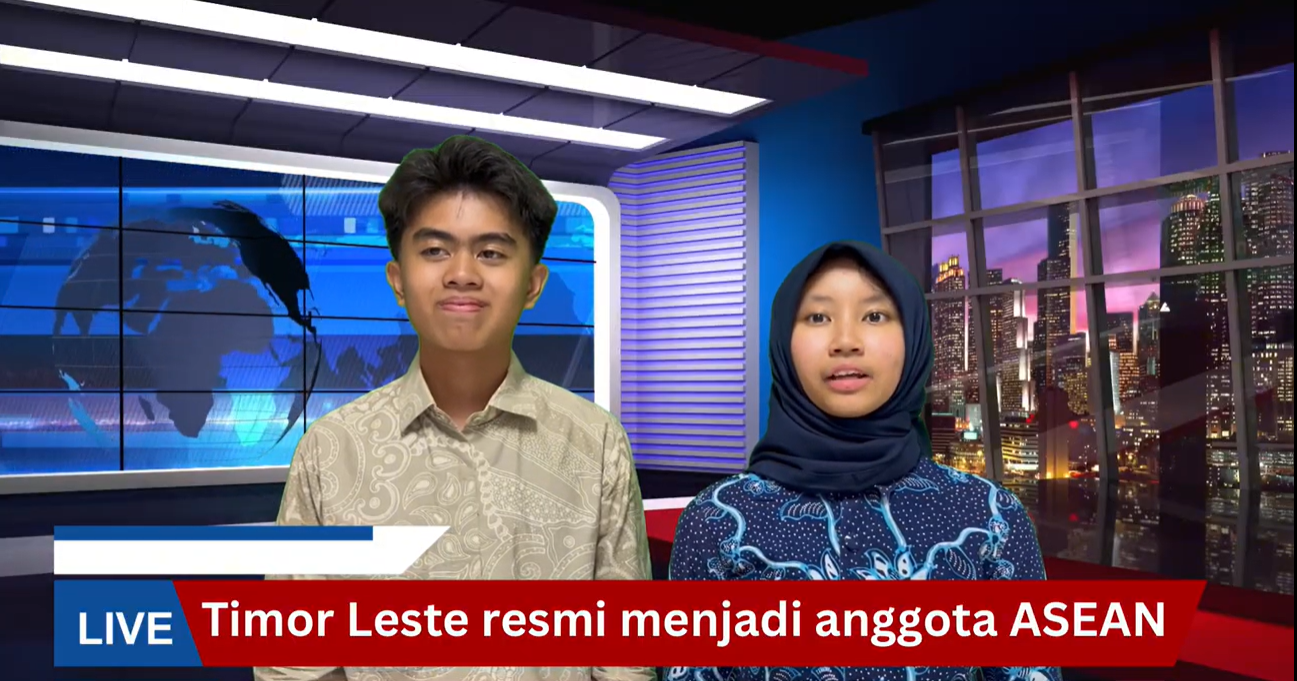
Have you ever wondered what it takes to deliver breaking news with perfect clarity, confidence, and just the right facial expressions? It is not as easy as it looks on television! Recently, our young learners took on the exciting challenge of becoming professional news anchors in their Bahasa Indonesia project.
From Viewers to Broadcasters
Over a thrilling five-week journey, the students transformed their learning space into a dynamic, fast-paced newsroom. Guided by Mr. Fatahillah, they did not just read about news structures; they dove deep into the mechanics of ADIKSIMBA (the Indonesian equivalent of the 5W1H principle). The adventure began with analyzing professional news anchors, observing how pauses, intonation, and emphasis can completely change the impact of a headline.
Armed with their iPads, the students moved swiftly from theory to practice. They meticulously marked their digital scripts using the Pages app, turning plain text into a colorful, strategic map of vocal cues. The real magic happened when they stood in front of the camera. Utilizing a teleprompter application, they practiced the delicate art of maintaining eye contact while actively managing their gestures and facial expressions. Finally, they recorded and edited their own news segments using iMovie, culminating in a spectacular viewing and evaluation session where they celebrated their hard work.
Behind the Teleprompter
This project was about much more than just learning language arts; it was a deep dive into an authentic role. By stepping into the shoes of professional news anchors, the students experienced high-level real-world engagement. The project required them to exercise deep critical thinking as they made deliberate decisions on word emphasis and pacing to ensure their messages were never ambiguous to the listener.
Every student enjoyed the freedom of personalization through student choice, selecting news topics and articles that genuinely sparked their own interests. Throughout the process, they actively honed their communication and creation skills, turning raw information into an engaging, polished multimedia presentation. They also relied heavily on teamwork, engaging in joint reasoning to evaluate professional broadcast videos together before producing and refining their final shared product.

So, the next time you turn on the evening news at home, why not ask your child to analyze the anchor’s delivery? You might be surprised by their expert insights! Let’s continue to support Mr. Fatahillah and our amazing young broadcasters as they find their confident voices and share their stories with the world. What exciting headlines will they conquer next?