When Tea Met Potato: A Biology Adventure in Passive Transport
Have you ever watched a tea bag steep in hot water and wondered what invisible force pulls the color out? Or why a slice of potato left in salt water turns limp while one in plain water stays firm? These everyday mysteries became the starting point of a fascinating scientific inquiry for our Grade 8 Biology students.
The Great Diffusion Experiment
The mission was deceptively simple: understand how substances move across cell membranes without using energy. Mr. Haz, the class facilitator, didn’t just hand out diagrams and definitions. Instead, he transformed the classroom into a living laboratory where textbook concepts came to life.
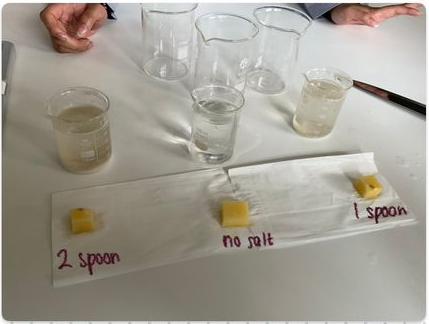
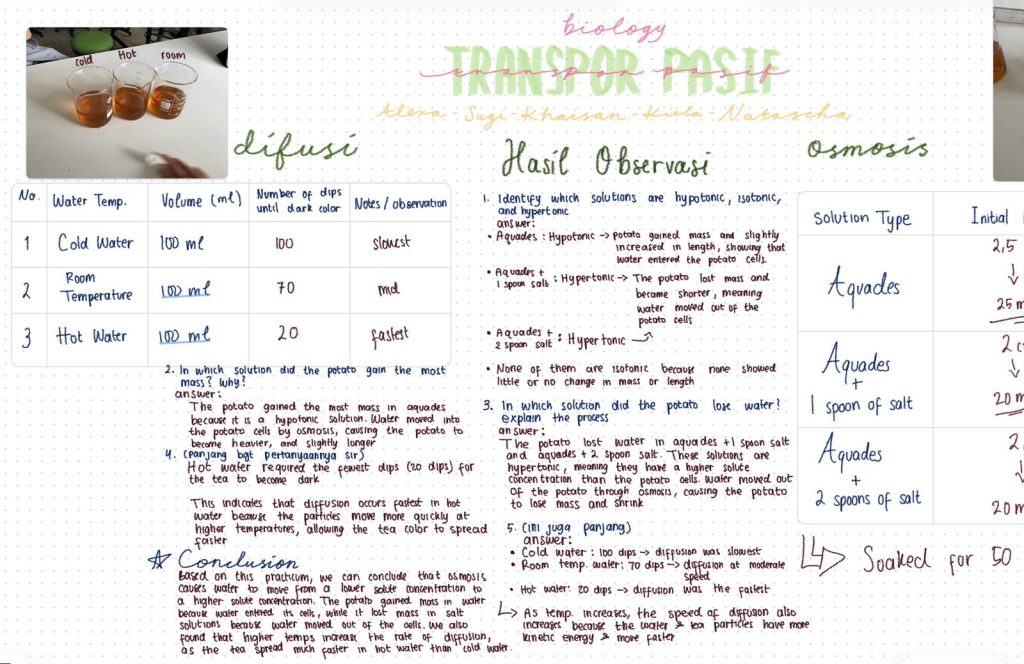
Armed with tea bags, water at different temperatures, potatoes, distilled water, and salt solution, students dove into hands-on experimentation. They observed how tea diffuses faster in hot water, how potato strips change texture in salty versus fresh water, and how osmosis—the movement of water across a membrane—works in real time. The classroom buzzed with focused energy as students measured, observed, and recorded their findings, turning abstract biological processes into tangible, visible results.
Beyond the Lab Coat
What made this more than a standard science lesson was how deeply the learning connected to the world outside the classroom. Students didn’t just memorize the definition of diffusion; they experienced it firsthand. They began to see the same principles at work everywhere—in the way sugar dissolves in their morning coffee, in how plants absorb water from the soil, and even in how their own cells maintain balance every moment of the day.
Throughout the process, students worked in collaborative teams, discussing observations and challenging each other’s reasoning. They exercised student choice in how they set up their experiments and which variables to explore. As they connected their lab results to real-world phenomena, they practiced critical analysis, moving from simply describing “what happened” to understanding “why it matters.” The experiment also fostered environmental awareness, as students learned to use materials wisely and manage waste responsibly—a reminder that science and sustainability go hand in hand.
A New Lens on the Natural World
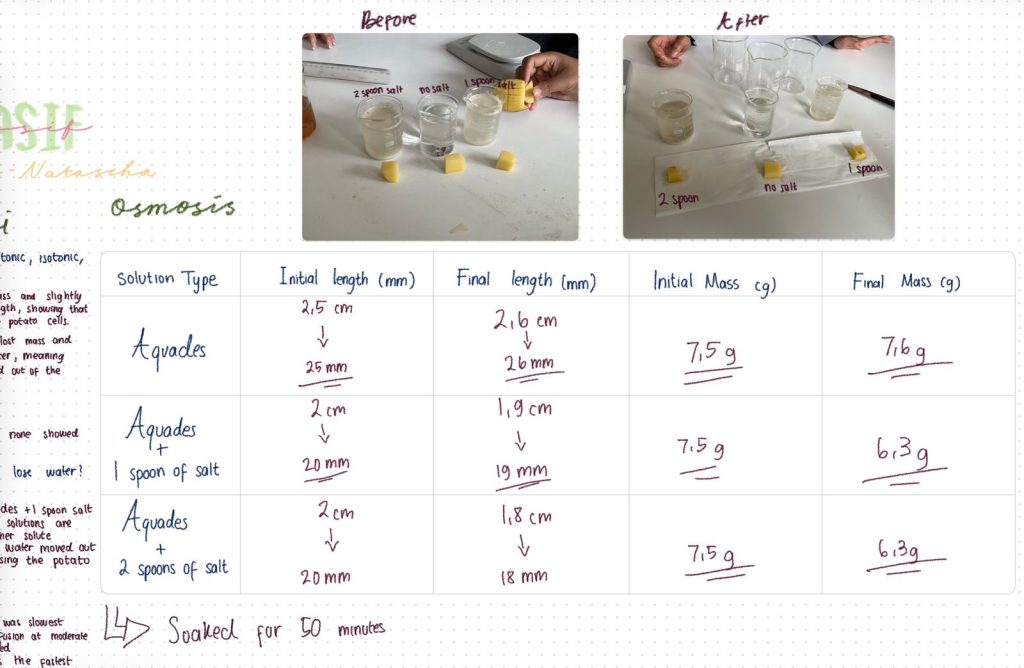
By the end of the session, the students had discovered something profound: the same natural processes happening inside a tea cup are also happening inside their own bodies every single second. Passive transport isn’t just a chapter in a textbook—it’s the silent, constant dance of life itself.
So, the next time you’re in the kitchen with your child and they watch tea steeping or vegetables soaking, ask them what they think is happening at the microscopic level. You might be surprised to find they see not just food and drink, but a world of molecules in motion, waiting to be explored.