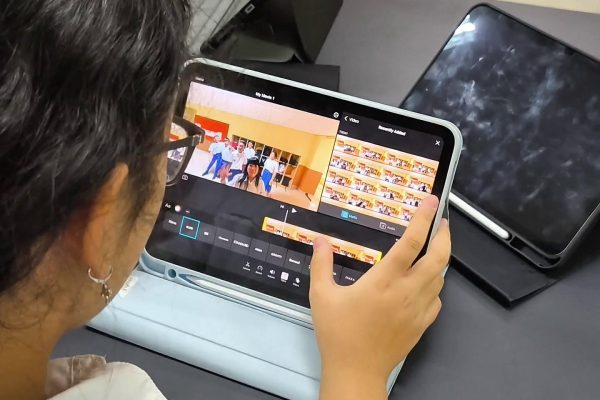
Smart Shoppers: Mastering Math with a Rp 150,000 Mission
Imagine walking into a store with exactly Rp 150,000 in your pocket. You see your favorite snacks, stationery, and toys, but every shelf is covered in different colored tags: “20% Off,” “Discount 50%,” or “Special Price.” Is it a great deal, or will you run out of cash at the register?
This wasn’t a weekend trip to the mall; this was a Tuesday morning Mathematics class where the textbook was replaced by a bustling, simulated marketplace.
More Than Just a Classroom Store
The project began with a challenge from Mr. Arnold. He didn’t just want the Year 7 students to memorize the formula for calculating percentages. Instead, he invited them to become savvy consumers. The classroom was transformed into a pop-up supermarket, stocked with various goods, each labeled with specific prices and discount rates.
The instructions were simple yet tricky: Spend your simulation money wisely. Students had to maximize their budget—spending as close to the limit as possible without going over. This wasn’t just about picking random items; they had to navigate the aisles, select the products they actually wanted, and immediately calculate the final price to see if it fit their financial plan. The energy in the room shifted from passive listening to active strategizing as students weighed their options.
Ready for the Real Checkout?
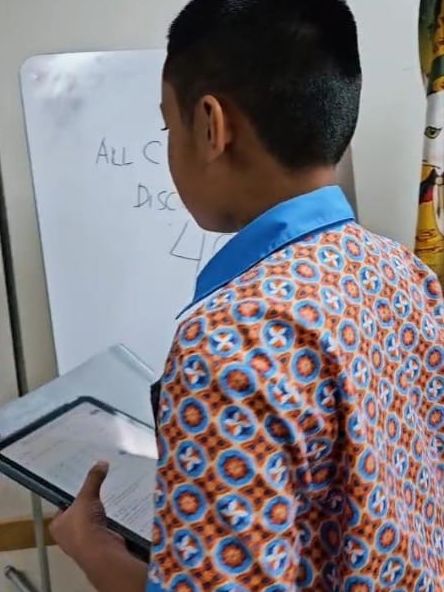


These Year 7 students have proven they can spot a deal and balance a budget using professional tools. They have moved beyond knowing “how” to calculate a discount to understanding “why” it matters.
Now that they have mastered the art of the shopping list, one has to wonder: the next time you take them to the grocery store, will they be the ones checking the receipt for errors? It might be time to let them manage the family cart—you might just save a little extra cash!
Decoding Discounts with Digital Tools
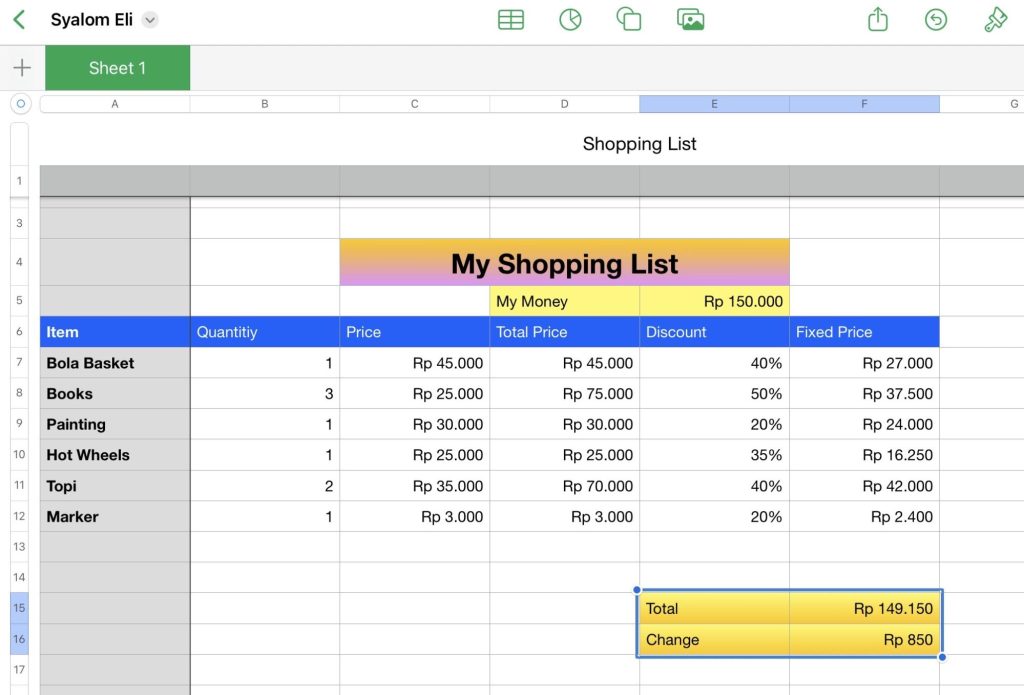
What looked like a shopping spree was actually a deep dive into real-world engagement. As students filled their baskets, they turned to their iPads, not to play games, but to work as data analysts. Using the Numbers app, they built their own digital receipts.
Here, Mr. Arnold stepped back, allowing student choice to drive the learning. Because they could pick items that genuinely interested them, the motivation to get the math right was internal, not external. They weren’t solving a generic problem from a book; they were solving a personal financial puzzle.
The true magic happened in the spreadsheet. Students had to apply computational thinking to formulate rules that would automatically calculate the final price after the discount. They were designing a solution that worked dynamically. If they removed an item, the total had to update instantly. This process turned abstract arithmetic into a tangible, useful skill. By the time they finalized their lists and calculated their change, they had engaged in sustained inquiry about how money, value, and math intersect in daily life.